

The ZZ Plant
Zanzibar Gem
Zamioculcas zamiifolia
With its structural whimsy, glossy leaves, and enduring vitality, the gem from Zanzibar is here to stay. Plants as forgiving as the ZZ Plant (Zamioculcas zamiifolia) come few and far between, and it’s for this reason their popularity as a houseplant and interiorscape design element has taken off over the past 30 years. Although it’s been known to Western science for centuries, it wasn’t until 1996 that a Dutch nursery out of South Africa began commercial production of Zamioculcas zamiifolia, at which point its popularity quickly spread around the world as a hardy, low maintenance houseplant. Since then, they’ve become nearly as ubiquitous as Pothos and Snake Plants in interiorscapes, prized for their tolerance of neglect and adaptability to various lighting conditions. Widely cited as “living fossils,” ZZ Plants are an aroid species that evolved roughly 42 million years ago, a lineage alive since the reign of the dinosaurs. The binomial name Zamioculcas zamiifolia, simplifiedto ZZ for common use, actually refers to the plant’s resemblance to the unrelated Zamia genus of cycads, another line of plants considered to be living fossils. The ZZ Plant is the only extant species in the genus Zamioculcas, belonging to the family Araceae, making it more closely related to Pothos and Philodendrons than to Zamia cycads or even palms, which it also resembles. The suffix -culcas lends itself from Arabic, meaning elephant ear, and it refers to the related genus of aroids Colocasia commonly called Elephant Ears, where the root crop Taro comes from.
In their native East and Southeast Africa, they are a traditional medicine plant and juiced leaves are used to treat ear aches in parts of modern day Tanzania and Malawi, while a poultice of bruised plant matter is used to treat symptoms of an inflammatory condition known as mshipa that comes from a parasitic infection. The roots are used topically by Sukuma people in Tanzania to treat ulcers. Recent Western scientific studies that have looked at the ZZ Plant’s potential medicinal qualities have isolated antibacterial compounds, among other bioactive compounds such as caffeine. Scientific studies on the plant’s bioactive compounds are ongoing. As a member of the family Araceae, they contain calcium oxalate crystals, an irritant used as a defense against herbivory, so the plant is considered toxic to ingest for humans and other animals without proper preparation.
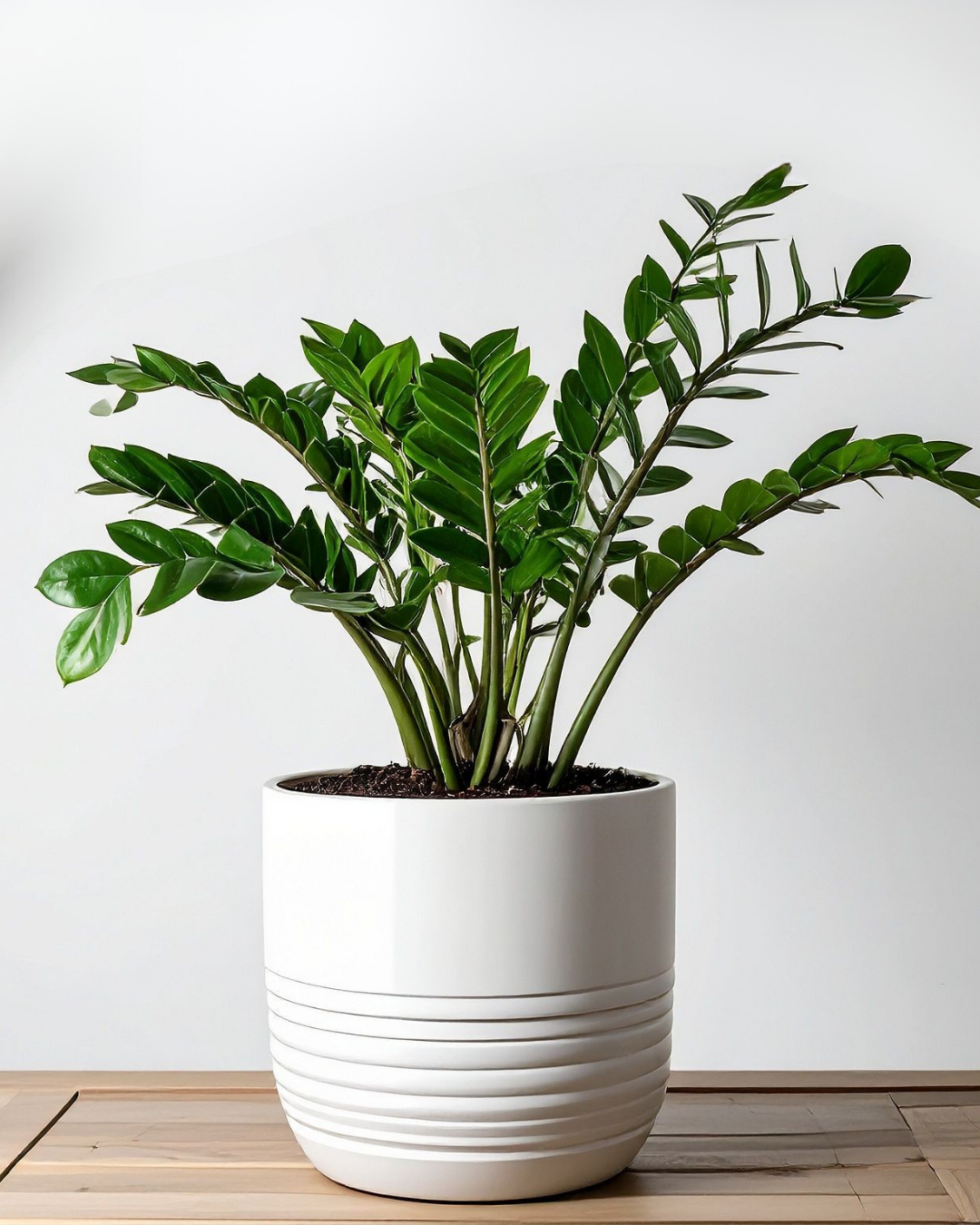
ZZ Plants have firmly cemented themselves as an industry favorite, adding an element of architectural interest wherever they are placed. Each stalk emerges from the pot upright before arching to the side, and is actually a single compound leaf covered in glossy leaflets. Newer plants usually grow compact and upright, but they tend to splay out more as the plant grows and ages, although my personal “Raven” ZZ has never splayed out in the six years I’ve had it—I’m not sure why but it still stands upright, possibly due to specific conditions in my home and care routine. My theory is the more the plant gets jostled about, the floppier and more splayed out it may become, especially in lower than ideal lighting. The first time I recall seeing a ZZ Plant, I thought it was fake. They look like someone took a bunch of cut branches from another plant and stuffed them into a vase and called it a houseplant. But no, it’s very real and that is just how they grow! The stem of the plant resides below the soil, forming thick tubers that store water and starchy nutrients (careful not to stab those when checking soil moisture with sharp objects). These tubers and the thick petioles (stalks) of the plant mean it’s a proper succulent, and should only be watered when completely dry, especially in cooler and darker indoor climates. With the hot and dry, hot and rainy fluctuations of their native East Africa, they’re highly adaptable and grow out of rocky areas and in shady forests. They can turn on and off CAM (crassulacean acid metabolism), which is a water saving form of photosynthesis where the plant will keep its stomata shut throughout the day and breathe only at night, a drought response in the case of the ZZ Plant, rather than permanent preference, as they grow in the dryer, rocky habitats with bursts of sporadic heavy moisture.
ZZ PLANT CARE
Watering
Perhaps in hotter environments ZZ Plants can take more frequent moisture, but in the cooler and lower light areas indoors with long Utah winters, they must go completely dry between waterings to prevent rot. If the plant remains too wet, and this is especially common in larger pots, the roots and tubers will quickly turn to mush. Their tubers, when exposed at the top of the soil, can show sings of dehydration by shriveling slightly when the plant becomes thirsty, a useful key to understanding the plant in my opinion. When severely underwatered, the plant appears limp and you may lose some leaves and even some of the roots and tubers as they whither away. When a leaf does inevitably die off, it will usually leave the bottom, fat part of the petiole intact for some reason, and it will remain there until removed or until it eventually dries up and falls off. They likely hold onto this lower half of the petiole to continue storing water and nutrients for the rest of the plant to use. I’ve left one of these “stumps” attached at the base of my plant for like three years now, and I’ve decided to let it remain as a reminder of the impermanence of everything that lives.
Lighting
A popular choice for lower light areas indoors, ZZ Plants can tolerate low light but will perform their best and look the most beautiful in bright shade to dappled sun. Prolonged direct sun, especially our high altitude Utah sun, can easily burn their leaves and cause discoloration. Too little light will lead to very slow growth, with smaller and weaker leaves, although they may last a very long time in lower light without dying. In Ideal lighting, they will grow fuller, faster, and healthier.
Repotting and Feeding
They become very tight in their pots when they are ready for more space, but really don’t mind being kept in tight spaces for long periods. I’ve only repotted my little 6” ZZ once in the six years since I’ve had it, and did it only because I wanted to put it in a porous clay pot to help it dry out faster. It’s now maybe 4ft tall and fills out its 8” pot nicely, which goes to show just how slow they grow, putting out new growth in spurts every year. When repotting, to avoid excessive floppiness you can try to hold all the stalks together upright while working with the plant, or even tie them up with something to keep them from flopping everywhere.
There are several cultivars of ZZ Plants on the market today, from the standard green form to the popular dark, almost black foliage of the ZZ “Raven” that emerges green before fading to nearly black. There are shorter, compact mutants called “Zenzi” and “Zamicro,” as well as variegated varieties and the color changing cultivar “Chameleon” that emerges cream colored before fading to a more solid green. Whatever variety fits your fancy, you’re sure to find one you like if you visit any of our three Cactus & Tropicals locations in Salt Lake, Draper, and Midvale today!
By Nathalie LeBaron