SPIDER MITE TREATMENT
Spider mites are members of the Tetranychidae mite family and are one of the most common and persistent indoor plant pests. They are close cousins to spiders and ticks, as members of the Arachnida class, and when viewed under magnification they actually look quite similar to ticks. But don’t worry - They are not harmful to humans or pets–just (unfortunately) plants.
Spider mites can, and often do, affect most houseplants. However, they are most commonly found on a few select genus of plants such as Alocasia, Calathea, Goeppertia, and Citrus. They spread most quickly on plants that are experiencing water stress, meaning a plant that is slightly wilted from under or overwatering (overwatering can cause wilting by damaging the roots to a point they can’t take up water anymore). This is likely where a common myth that spider mites do not like humidity comes from–unfortunately, they are not really bothered by humidity.
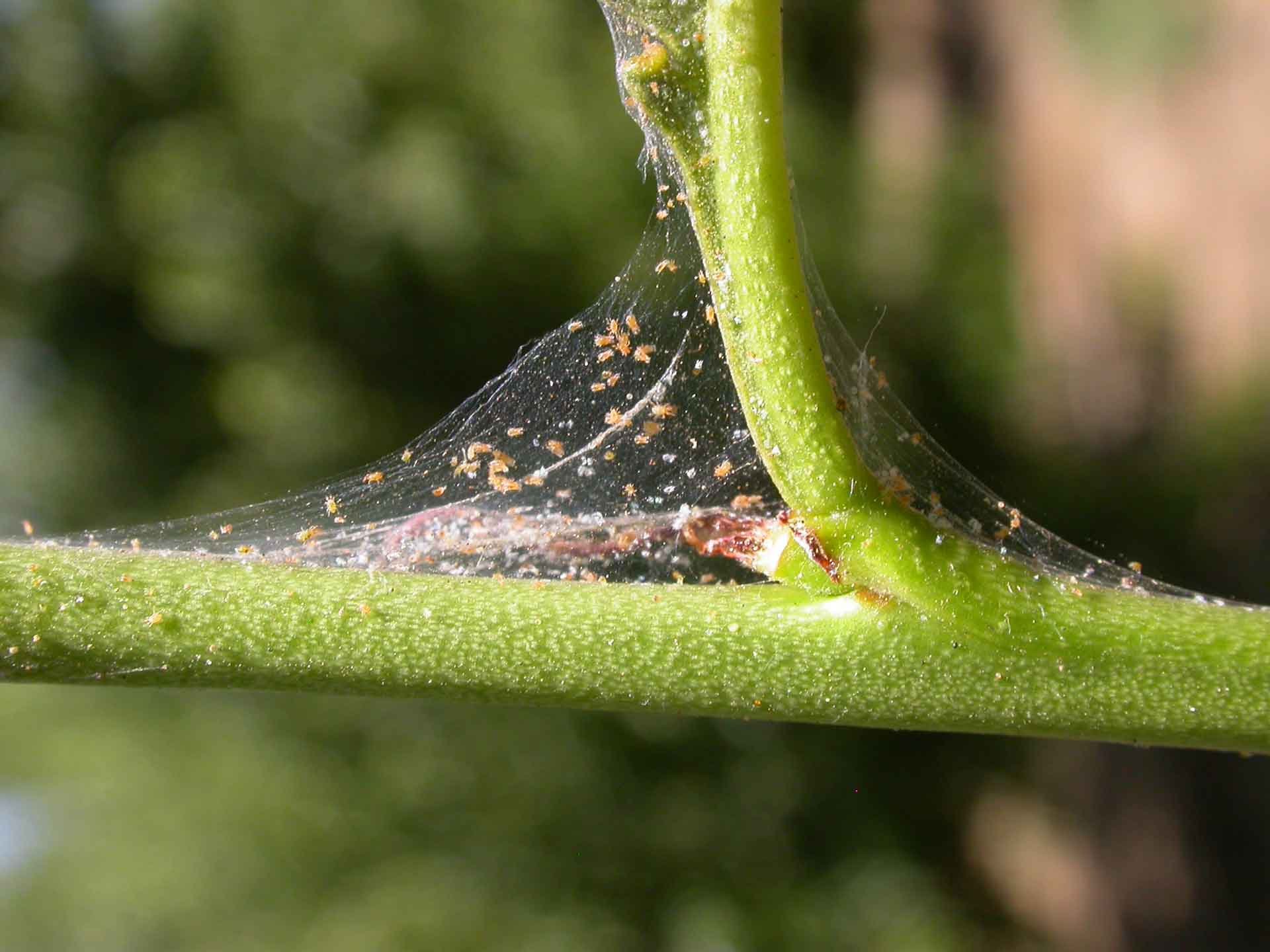
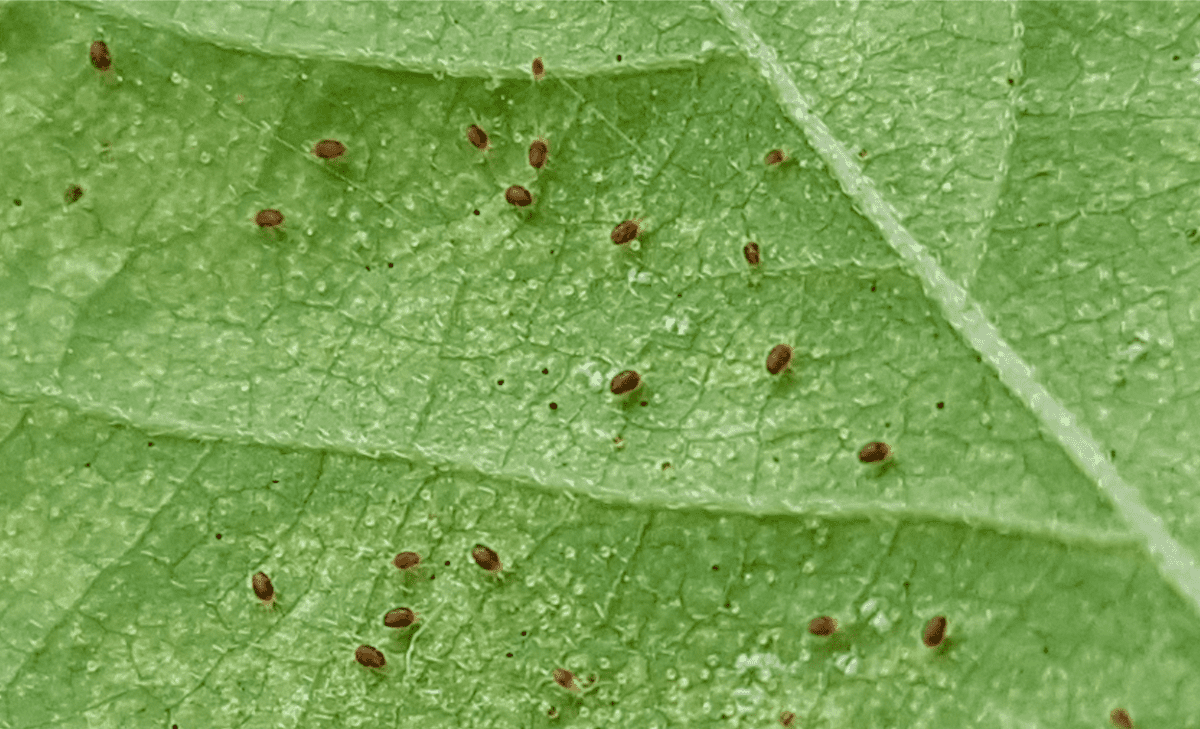
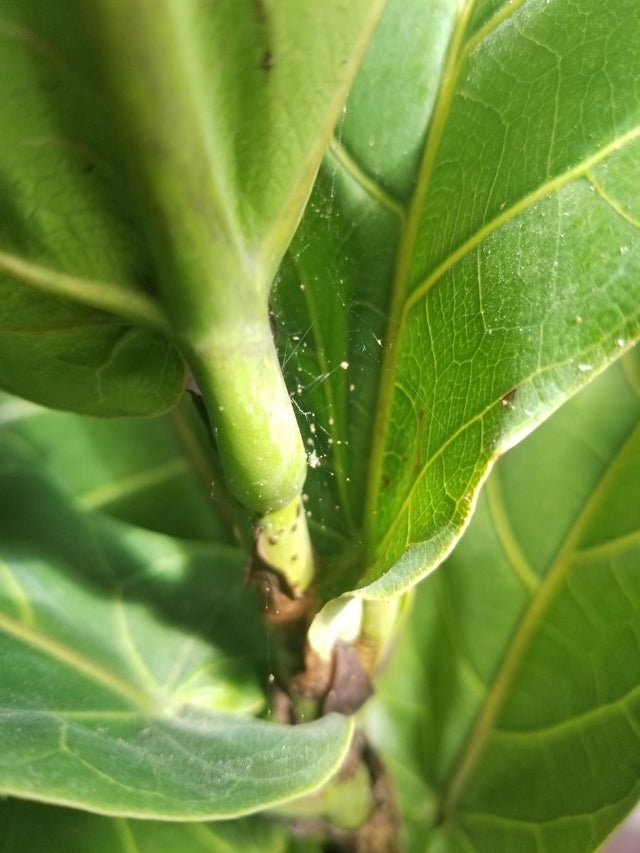
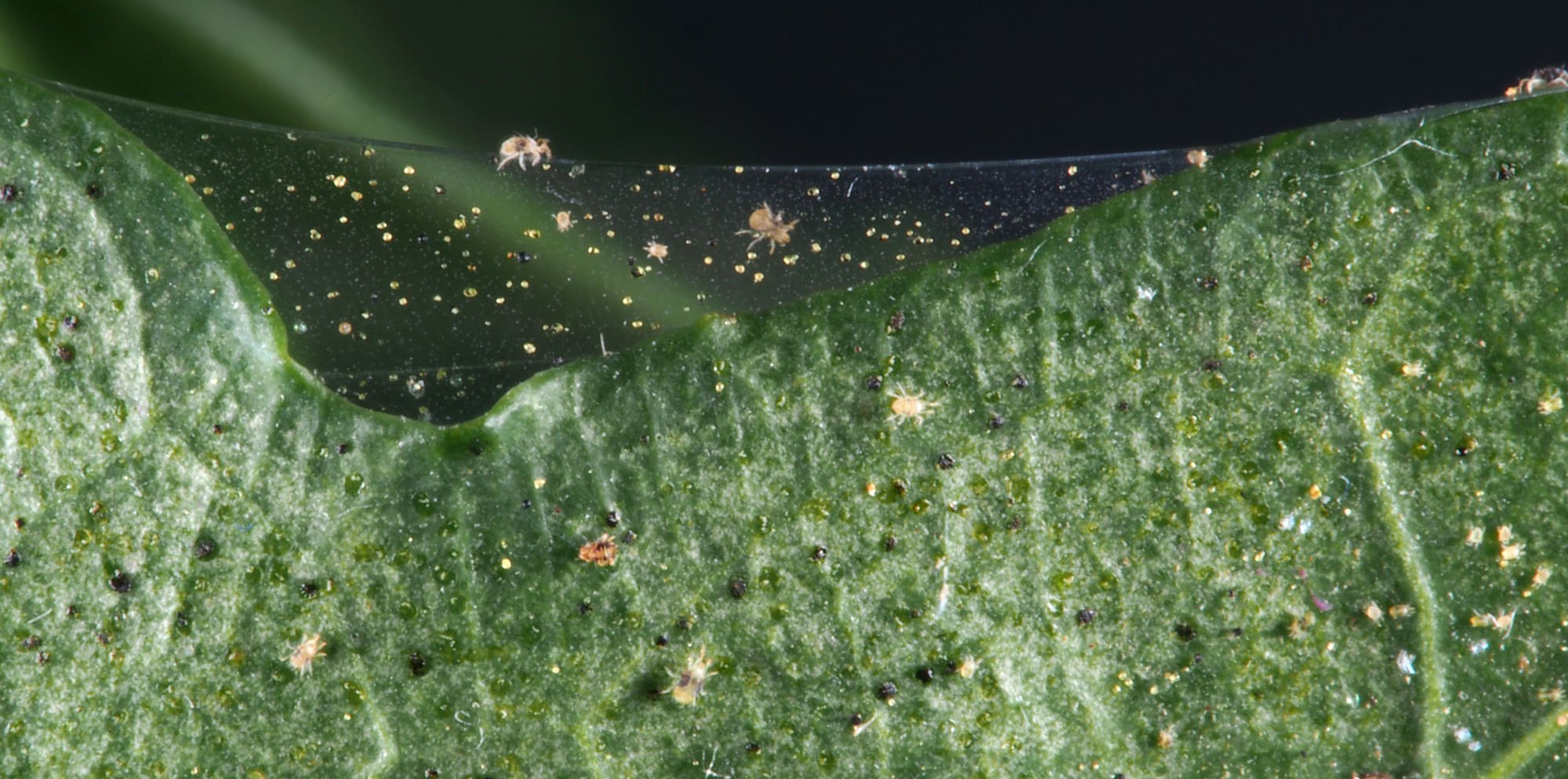
The mites themselves are incredibly small and are difficult to detect when they first appear on a plant. They will start spinning their small webs close to the surface of the plant, which they use to protect themselves and their young, as well as to lay their eggs in. These protective webs are one of the hallmark signs of spider mite infestations, and are part of the reason they are commonly called spider mites. If the mites are visible to the naked eye, they usually look like little specks of pepper, though they do vary in color depending on the species. It is common to see the webbing before any other signs, but plants may also present with speckled damage on the foliage as an initial indicator as well. Spider mites are a type of sucking insect, meaning that they suck water and nutrients out of the plant through the leaves, damaging the cuticle of the leaf as they go. This is what causes the spotting. If left untreated, spider mites will eventually kill the plant that is hosting them. Luckily, there are a few effective ways to treat these tiny pests.
But before we get those, let's talk quickly about preventative care. One of the best deterrents of spider mites is keeping your plant’s leaves clean. Spider mites are attracted to dust, and can build up their population quickly. Cleaning leaves regularly can help knock off any industrious mites looking to infest your plant, and can also help the plant photosynthesize more efficiently which allows it to be more resilient to pests. Plant leaves can be cleaned with a cloth, paper towel, or sponge (ProTip: Unscented baby wipes do a great job cleaning plant leaves without leaving any residue behind). Showering plants off regularly can also help keep leaves clean.
DISCLAIMER: It is recommended that you spot test the following treatments before treating the entire plant, by applying the solution to a small portion of a leaf and allowing it to dry. Some plants are sensitive to liquid applied to their leaves.
-
This option is a good place to start, especially if the infestation is not too advanced. A few supplies are needed for this, but luckily they are common household items. What you will need:
¼ cup rubbing alcohol
1 quart water
A few drops castile soap or unscented dish soap
Microfiber cloth, paper towels, and/or clean make-up brush
Empty spray bottle (technically optional, but makes application MUCH easier)
In your empty spray bottle, add ¼ cup of rubbing alcohol. Then, add the quart of water to the alcohol and drop in a few drops of your preferred soap. Shake the bottle gently to combine. Make sure to perform a spot test before applying to all of the foliage, to see if your plant can handle the treatment. When you’ve determined your plant can tolerate the treatment well, you will want to spray your plant thoroughly. Apply to the top of the leaves, underneath the leaves, and any stems or exposed trunks. After applying to the plant liberally, wipe down all of the leaves individually, making sure to wipe down the top and bottom of each leaf. This is where you will use a microfiber cloth, paper towels, or a makeup brush. The brush is a good option for plants that have a lot of small crevices, as the bristles can maneuver into them. To use this option, buff the brush across the leaf, wiping the brush on a towel between leaves if needed. It can be a little tedious, but it is helpful to remove any mites that may have been sheltered by their webbing. Repeat weekly until the infestation has subsided.
-
There are many different kinds of pesticides available on the market, and there are many formulated to specifically treat spider mites. When using these sprays, make sure to follow the instructions for use on the label. Typically, after spot testing, you will spray the plant thoroughly, making sure to apply to the top and the underside of the foliage. Some sprays need to be left on, others will need to be wiped off.
One of the sprays we carry and recommend for spider mites in our greenhouse is the Bonide Captain Jack’s Dead Bug Brew. The active ingredient is Spinosad, which is derived from bacteria commonly found in soil. It is approved for organic gardening, and can be used up until the day before harvest on edible plants. Spinosad is also considered a reduced risk insecticide, meaning that it has low environmental impact, low mammalian impact, and is compatible with different integrated pest management systems (Racke, 2006). To apply, follow the instructions on the label.
-
Integrated pest management is the practice of using beneficial insects to control pests. This option is probably the most expensive and unusual, but also one of the most effective options for long term control without any applied chemicals. The beneficial insects feed on the harmful bugs and do not harm plants, even if they eradicate their food source.
One of the most popular options for spider mites is to actually use a predatory mite. The predatory mites will not hurt your plants and will make quick work of the spider mite population. When they run out of food, they will die back. Predatory mites are typically purchased in sachets that you then hang on your plants. The mites will leave the sachet and hunt down the spider mites on the plant they have been placed on. Like spider mites, predatory mites do not fly. They can, however, move from plant to plant if they get knocked off onto a proximal plant or if plants are tightly grouped together and touching. If you have multiple plants plagued with spider mites, make sure you get enough sachets to go on all of the affected plants.
Another excellent option are green lacewings. While the adults feed on pollen and nectar, the larvae feed on soft-bodied insects, including mites. The hungry larvae are also effective in controlling thrips, mealy bugs, aphids, and more! The drawback to using green lacewings indoors is that the adults do have wings, and can fly. Most people are not bothered by them and the adults will typically find their way outside, but worth noting just in case the possibility of flying insects is a no go for you.